From a Static Form to an AI Catering Concierge: How Sitar Palace Modernized Catering Inquiries
By FinOpps | September 2026
Sitar Palace is a contemporary Kerala restaurant and bar in Orangeburg, NY, known for bold flavors inspired by Kerala's toddy shop culture and a catering program that regularly serves weddings, corporate events, and family celebrations throughout the Hudson Valley and beyond. Running its branded site and invoicing on FinOpps, the moment that actually decides whether a booking happens is the same one every catering business lives or dies by: how fast a visitor's interest turns into a priced estimate they can say yes to.
The Problem With a Static Inquiry Form
Sitar Palace's catering inquiry page used to be a plain form — name, email, event type, and a free-text box. It didn't capture enough to build an estimate from, so in practice every inquiry still turned into a phone call or an email thread. A staff member had to re-key whatever was discussed into FinOpps by hand, with no structured record of guest count, dietary mix, protein preferences, delivery address, or event timing beyond whatever notes were taken on the call. The moment of interest — a visitor on the website — and the moment of action — a priced estimate — never connected, and inquiries without a fast follow-up went cold.
A Conversation Instead of a Form
FinOpps rebuilt Sitar Palace's catering inquiry page around a step-by-step chat experience instead of a form — one question at a time, feeling more like texting a concierge than filling out paperwork: event type, catering style, delivery address with Google Places autocomplete, date, dining time, guest count, dietary preferences, protein choices, and any additional notes.
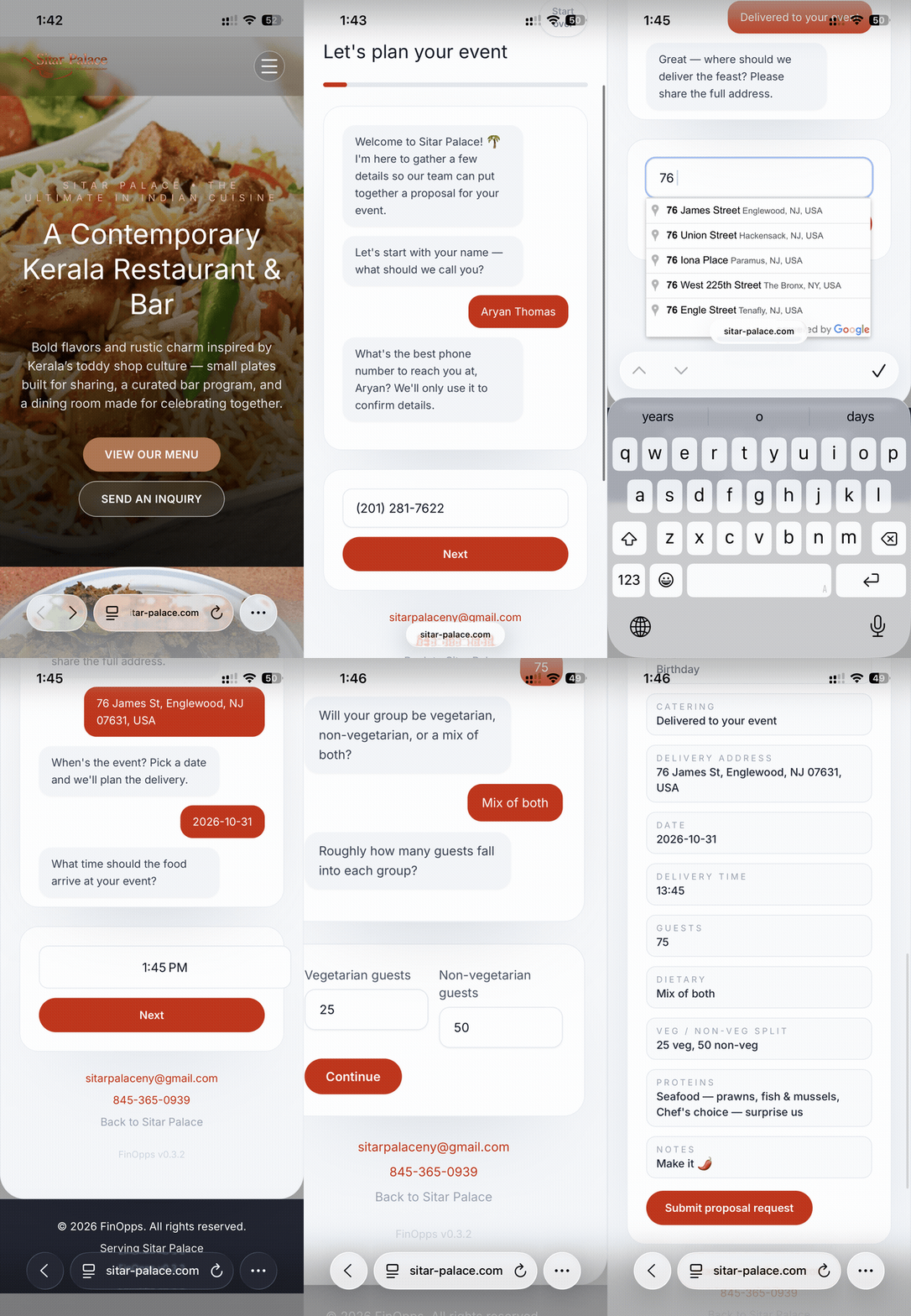
Behind the scenes, every submission:
- Is matched to an existing customer record by phone number, or creates a new one — with each business's customer data kept fully separate from every other business on the platform
- Is handed to Claude, which drafts a human-readable order summary and infers the requested event time from what the customer said, converted to the correct local time
- Falls back to a deterministic, rule-based summary and time-of-day lookup if Claude is ever slow, errors, or returns something unparseable — so one AI hiccup never blocks a customer's inquiry
- Automatically creates a real FinOpps estimate, with a line item carrying the drafted summary and the correct next invoice number for that business
- Notifies the business owner by email and SMS, and sends the customer their own confirmation with the estimate number and a recap of what they submitted
One safeguard matters more than the rest: the estimate is created hidden and pre-expired. The customer never sees an unpriced draft — staff review and price the line item before anything goes out. Claude accelerates the drafting; a person still approves the offer.
Why Claude
This isn't a toy chatbot — it's a financial workflow producing real estimates inside a multi-tenant invoicing system, so the AI piece had to clear a higher bar than "sounds conversational." Three things made Claude the fit:
- Structured output discipline — Claude reliably returns the exact JSON shape FinOpps' backend expects, even though the source input is a loosely-structured chat transcript
- Judgment, not just extraction — turning "Lunch, 40 guests, half vegetarian, chicken and lamb" into a coherent, readable summary a busy restaurant owner can scan in seconds, not a robotic field dump
- Safe degradation — a financial workflow can't have Claude as a single point of failure, so the deterministic fallback described above exists specifically so one AI hiccup never blocks a customer's inquiry
What Changed
Estimates that used to depend on someone being available to take a call, jot notes, and re-key them by hand now arrive as a staff-ready draft automatically — at any hour, in the exact format staff already use everywhere else on FinOpps. Nothing about the pricing decision changes: an owner still reviews and prices every estimate before it reaches a customer. What changes is that the drafting work — the part that used to eat staff time and lose detail between a phone call and a keyboard — now happens the moment a customer finishes typing.
The service was built multi-tenant from day one, with access scoped so it can only reach the exact data it needs, and it already serves other FinOpps restaurant, food-service, and catering businesses on the same foundation — no new code required to onboard the next one.
Related reading
FinOpps gives caterers and event vendors a branded website, conversational inquiry capture, and AI-assisted estimate drafting — with staff always in control of the final price. Learn more →